Kids · उत्तरकाण्ड Uttara Kāṇḍa · Ages 8–12
The Seven Questions of the King of Birds
On the blue mountain Nīlagiri, under the great banyan, the old crow Kākabhuśuṇḍi had told Garuḍa the whole story of Lord Rāma, and then the story of his own long life. Garuḍa's doubt was gone. His heart was quiet. Most visitors would have said thank you and flown home.
Garuḍa did not. The king of birds, who carries Lord Viṣṇu himself through the sky, stayed sitting at the feet of a crow, because there were still things he wanted to understand. This is the last part of the crow's story, and like the two before it, it comes only from Gosvāmī Tulsīdās. In his Rāmcaritmānas, Lord Śiva is telling all of this to Mother Pārvatī. Sage Vālmīki does not tell it.
The student who stayed
'My gracious master,' said Garuḍa lovingly, 'if you are fond of me, then count me as your servant, and answer me seven questions.' And he asked them, one after another, the way a careful student does. Which body, of all the bodies in the world, is the hardest to win? What is the greatest sorrow, and what is the greatest joy? How can you tell a saint from someone who only looks like one? What is the highest good deed, and what is the worst wrong? And what are the sicknesses of the mind? The crow was glad. 'Listen with reverence, dear Garuḍa,' he said, 'and I will tell you briefly what I think.'
Gosvāmī Tulsīdās
The rarest gift
'There is no body as good as the human body,' said Kākabhuśuṇḍi. 'Every living thing longs for it. It is a ladder — it can carry a soul down, or up, or all the way to freedom — and it gives three gifts: wisdom, a quiet heart, and love for the Lord. People who are given this body and spend it only chasing pleasures are like someone who has a magic touchstone in the palm of his hand and trades it away for bits of broken glass.'
Gosvāmī Tulsīdās
Sorrow, joy, and how to tell a saint
'There is no sorrow in the world like being in want,' the crow went on, 'and no joy in the world like meeting the good. A saint does good in thought, word and deed — that is simply his nature, O king of birds. Saints bear trouble so that others may be helped; the wicked take trouble only to hurt others. A saint is like the birch tree, which lets its own bark be peeled away for others' good. The wicked are like the hemp plant, which is stripped and twisted into ropes — and ropes only tie people up. They are like the rat and the snake, who harm others and gain nothing by it, and like the hailstorm, which flattens the crops and then melts away. When the wicked rise, the world suffers, as when a comet appears. When a saint rises, the whole world is glad, like the rising of the sun and the moon.'
Gosvāmī Tulsīdās
The best deed and the worst
'The highest good known to the Vedas,' said the crow, 'is this: to harm no one. And there is no wrong as heavy as speaking ill of others.' He told Garuḍa what becomes of people who spend their lives finding fault — how those who sneer at the saints are born as owls, who love the night and have never seen the sun of wisdom, and those who sneer at everyone end up as bats, hanging upside down in the dark — birds who have turned their backs on the light.
Gosvāmī Tulsīdās
The sicknesses of the mind
'Now, dear Garuḍa, hear about the sicknesses of the mind, which everyone suffers from and few ever notice. The root of all of them is moha — confusion about what matters. From it grow the others. Wanting things is like a cold wind in the body; greed is like a heavy, clogging cold; anger is like a fire in the chest — and when all three come at once, it is a dangerous fever. Thinking "mine, mine" is an itch that will not stop. Envy is another itch. Pride is like gout, which makes every step painful. There are more of these than I could ever name — and people die of a single one. How can a mind with so many find peace? Vows and fasting, charity and prayers are good medicines for many things, but they do not cure these. Yet they can be cured, if, by Lord Rāma's grace, four things come together. Trust your physician — a true teacher. Keep the diet — turn away from greedy pleasures. Take the medicine — love for Lord Rāma. And take it in the right vessel — a faithful, steady mind. You will know you are getting well when your heart grows strong and calm, when your appetite for good resolutions grows every day, and when the weakness of wanting fades away.'
Gosvāmī Tulsīdās
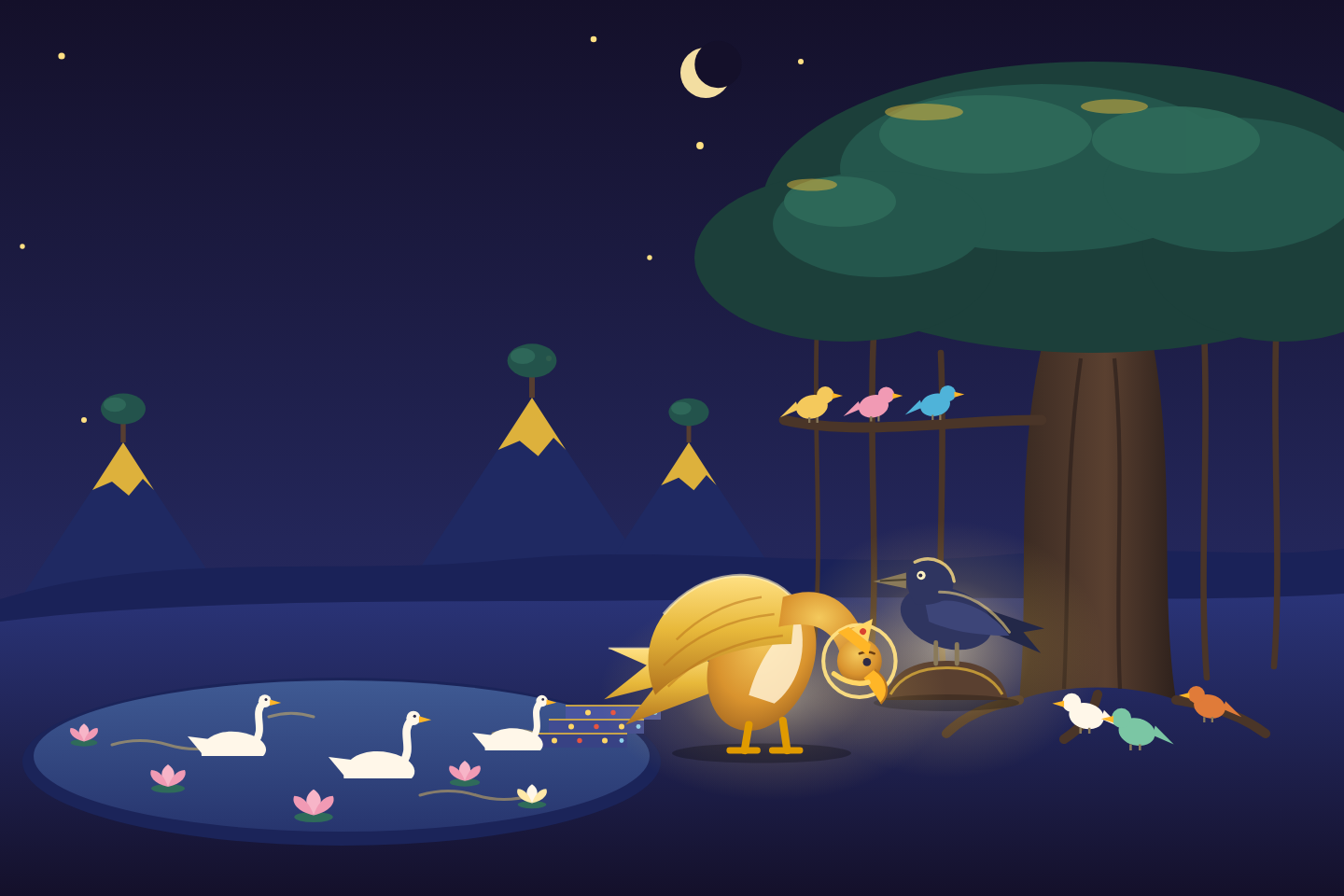
The king of birds bows to a crow
When the crow had finished, Garuḍa's eyes were shining. 'I have gained what I came for,' he said. 'I was drifting in an ocean of confusion, and you have been a boat to me. I can never repay you — so I bow at your feet again and again. Saints, trees, rivers, mountains and the earth itself all live for the good of others. The poets say a saint's heart is as soft as butter, but they did not say enough: butter melts only when you hold it to the fire, and a saint's heart melts at the sorrow of others. Please, always think of me as your servant.' He said it again and again. Then the king of birds, who carries Lord Viṣṇu through the sky, lowered his crowned head to the feet of a small blue-black crow. He rose, and flew away to Vaikuṇṭha, the Lord's own home, with Lord Rāma's image held fast in his heart. And Lord Śiva said to Mother Pārvatī: 'There is no gain in the world like the company of the good — and it comes only by the grace of the Lord.'
Gosvāmī Tulsīdās
✦ Two tellings, one story
Sage Vālmīki’s Rāmāyaṇa (Sanskrit)
Sage Vālmīki does not tell this story. In his Rāmāyaṇa there is no crow Kākabhuśuṇḍi, no visit by Garuḍa to a blue mountain, and no seven questions. The whole of today's story belongs to Gosvāmī Tulsīdās, and we have not invented a parallel for it.
Gosvāmī Tulsīdās’s Rāmcaritmānas (Awadhi)
Gosvāmī Tulsīdās tells it at the close of his Uttar Kāṇḍa, inside Lord Śiva's telling to Mother Pārvatī. After the crow's own story, Garuḍa asks to be counted as his servant and puts seven questions: which body is the hardest to obtain; what is the greatest misery and what the highest joy; the true nature of saints and of the wicked; the highest merit known in the Vedas and the gravest sin; and the diseases of the mind. The crow answers each: there is no body like the human one, a ladder to hell, heaven or liberation, which the foolish throw away like a touchstone traded for glass; no misery like poverty and no joy like the company of saints; saints are good in thought, word and deed and suffer for others like the birch tree, while the wicked harm others at their own cost like the hemp, the rat and the serpent, the hail and the comet; non-violence is the highest merit and speaking ill of others the gravest sin — and he names the sad rebirths of those who revile the Lord, their teacher, holy people, the gods and the saints, which this story shortens to two gentle lines; then the diseases of the mind, with infatuation as their root, lust, greed and anger as wind, phlegm and bile, 'mineness' and envy as itches, egotism as gout, and many more, and their cure: faith in the true teacher as physician, indifference to sense-pleasures as the regimen, devotion to Lord Rāma as the life-giving herb and a devout mind as the vehicle. The crow adds that no one who turns from the Lord can be happy — sooner would hair grow on a tortoise or fire come out of ice. Garuḍa replies that the crow has been a vessel to him in the ocean of infatuation, that saints melt at others' suffering as butter melts at fire, and asks to be regarded always as his servant; he bows his head at Kākabhuśuṇḍi's feet and flies to Vaikuṇṭha with Lord Rāma in his heart, and Lord Śiva tells Mother Pārvatī that there is no gain like the fellowship of saints.
What this story teaches
Good questions honour a teacher
Garuḍa did not pretend to understand everything. He stayed, asked, and listened. Asking a real question is not a sign of being small — it is one of the kindest things you can do for someone who has something to teach.
The rarest gift is the one you already have
The crow's first answer surprised the king of birds: of all the bodies in the world, the human one is the hardest to win. You have been given a touchstone. Don't trade it for broken glass.
The company of the good
The greatest joy, said the crow, is simply being with good people — and Garuḍa proved it, bowing to a crow and flying home glad. Choose your company the way you would choose your medicine.
Words to know
- Garuḍa · the mighty king of the birds, who carries Lord Viṣṇu through the sky; wise and strong, and still humble enough to learn from a crow
- Kākabhuśuṇḍi · the gentle, wise and very old crow of the blue mountain, who tells Lord Rāma's story to the birds; 'kāka' means crow
- Nīlagiri · 'the blue mountain' in the far north, with four golden peaks, where the crow lives under a great banyan tree
- ahiṁsā · harming no one — in thought, word or deed; the crow calls it the highest good known to the Vedas
- moha · confusion about what truly matters; the crow names it the root of all the sicknesses of the mind
- Vaikuṇṭha · the shining home of Lord Viṣṇu, where Garuḍa flies at the end of the story
Rāmcaritmānas — Uttar-kāṇḍa (the caupāīs after dohā 120, through dohā 125). Sage Vālmīki's Rāmāyaṇa does not tell this episode. Where the two Rāmāyaṇas differ, we tell both faithfully.